


Video By Louise Mckenna
The Palatine Migration and Settlement in Ireland
Prepare to enter a rabbit hole that twists and spirals through the ages,
Where time folds like whispered secrets in a winding maze.
Here, history’s shadows dance with echoes softly spun,
Unravelling tales beneath the moon, where past and present run.
Step lightly, for each turn reveals a world both lost and found,
A timeless voyage through the depths where stories breathe profound.
Article by WakeUpeiRe.com
Modern Rhineland-Palatinate is a southwest German State bordered by France, Belgium and Luxembourg. The State capital, Mainz, features Jewish synagogues and cemeteries, the Romanesque Mainz Cathedral with ornate tombstones, and the Gutenberg Museum devoted to the inventor of the printing press. The lush Moselle Valley, with its riverside towns of Piesport and Bernkastel-Kues, is one of Germany’s largest wine regions
Modern German Palatinate – Rheinland-Pfalz has an area of 19,847 km² (7,663 sq mi) and a population of around 4.05 million people. The state is known for its picturesque river landscapes, historical cities, and renowned wine-producing regions. The majority of the population identifies as Roman Catholic, followed by Protestants and those with no religious affiliation.
The State was established incorporated in 1946 after World War II, formed from parts of the former states of Prussia, Hesse, and Bavaria. It is also recognized for its contributions to the development of the mRNA injection for COVID-19, with the company BioNTech based in Mainz allegedly playing a significant role.
It is also home to a significant American military presence, with many communities having a large percentage of American residents.
Are theses “Are Gallant Allies in Europe” that the Proclamation of independence references?

In the early 17th century, the Lower German Palatinate became a refuge for Protestants fleeing religious persecution in neighbouring regions. Families settled there. However, throughout the century, the Palatinate suffered repeated devastation from French invasions, leaving the population increasingly vulnerable.
Can you see the similarities between refugees then and refuges now? even now, Its the same families moving them around.

Following an exceptionally harsh winter and drawn by enticing notices from landowners in the New World, a significant wave of emigration began in 1709. This movement, known as the Palatine migration, saw thousands of families depart the region. While some emigrants travelled directly to North America, over 13,000 passed through London. Among these, approximately 3,000 were redirected to Ireland as part of an effort to increase the Protestant tenant population—a policy actively supported by Queen Anne and promoted by landlords of Irish estates.
Again I have to ask Can you see the similarities between then and now?
In September 1709, around 3,000 Palatines were resettled in rural Ireland, while a roughly equal number were transported to New York and North Carolina. However, the Irish experiment was largely unsuccessful: within three years, more than two-thirds of the Palatine settlers had left Ireland, returning to England or Germany. with two notable exceptions.
One notable exception was the settlement organized by Sir Thomas Southwell of Castle Matrix, near Rathkeale in County Limerick. Southwell proved to be the most successful landlord in retaining his allotment of Palatine settlers. He vigorously advocated for government support, bore many of the initial costs himself, and was only reimbursed shortly before his death in 1720. By 1711, Southwell had retained just ten Palatine families; by 1714, this number had grown to around 130. The area around his estate—including Killeheen, Ballingrane, and Courtmatrix—remains the largest concentration of Irish Palatine descendants to this day. this was achieved not only by violence but by expert cohesion… via signs and symbols.
It was this colony that expanded and evolved in to what we call the Irish State today, wrapped up in imperial ideologies, back room deals and a will to maintain power via divide and conquer methods, this then bleeds in to the largely protestant organisation of “Freemasonry” founded in 1599 in Scotland.
Did you know that one of the oldest freemason lodges in the world is located not 65 meters from Leinster House/An Dáil? and was set up just 5 years after Sir Thomas Southwell death? Perhaps a tunnel would keep them out of public eye?
The Freemasons are perhaps the most secret pervasive organisation in Ireland and indeed the world today, it has a long history dating back hundreds of years. The Grand Lodge of Ireland, Lodge No 2. located in 17 Molesworth Street in Dublin was founded in the year 1725.
This makes this lodge in Dublin the oldest in continuous existence. Also, it is considered the second most senior Grand Lodge of Freemasons in the world. Second only to The Lodge of Edinburgh, No.1 which was founded in the year 1599.
Hop, skip, Jump What a coincidence?


From this core settlement at Rathkeale, secondary colonies later emerged in other parts of Limerick—Adare, Pallaskenry, Glenosheen, Ballyorgan, and Ballyriggin—as well as in Kilcooley (Tipperary), Ballymacelligott and Tarbert (Kerry). These later communities all trace their roots to the original Rathkeale colony. However they did not note the Irish families expelled from the land or the many people they put back into it.
Aside from Southwell’s “success”, the only other enduring parent colony of Palatine settlement in Ireland was established by Abel Ram in County Wexford. He settled approximately 35 families—15 at Old Ross and 20 at Gorey—marking the second significant foothold of Palatine heritage in Ireland.
Confucius
Confucius said, “Signs and symbols rule the world, not words nor laws.”. And the Palatine knew this.
Confucius quote suggests that the underlying principles and meanings, often conveyed through visual or symbolic representations, have a greater impact on people’s actions and understanding of the world than formal written laws or spoken words.

Elaboration:
- Signs and Symbols: These can include things like rituals, ceremonies, images, and even gestures that communicate meaning beyond the literal.
- Words and Laws: These are more formal systems of communication and governance, often seen as the primary tools for establishing order and understanding.
- Confucius’s Perspective: By emphasizing the power of signs and symbols, Confucius highlights the importance of non-verbal communication, intuition, and the ability to perceive hidden meanings in the world.
At its core, the quote highlights that grasping the deeper principles—the signs and symbols—that shape human behaviour and social order is far more influential than simply following written rules or laws. This insight helps explain why most Palatine settlements ultimately failed, while a few succeeded: success depended not just on structures or regulations, but on shared meaning, trust, and cultural adaptation.
It was this foundational model—built on community cohesion, shared values, and symbolic leadership—that endured and evolved into something more lasting, something we still see traces of today. The People are as wise to it today as they where several hundred years ago… and that is what make it effective.
Consider the public response during the COVID-19 pandemic. Figures like Luke O’Neill and Claire Byrne became symbolic touchstones. Their presence, language, rituals, and even gestures conveyed meaning far beyond the literal. They provided a false sense of reassurance, an unrealistic sense of order, and clarity—not just through statements and decrees, but through the powerful use of symbols, symbolism and performance. Watch some of their “work” here.
Can you see the parallels? The success of communities—past and present—often hinges on more than policies; it’s about the symbols we rally around and the meanings we share.

This Palatine centre has been supported by the
Department of Rural and Community Development
under the
Community Centres Investment Fund 2022

This may come as a surprise: but even after all theses hundreds of years the Irish State are still funding the palatine mission.
The success and resilience of communities, both historically and in the present, often depend on more than just formal structures, policies, or legal frameworks. At their core, thriving communities are built around shared symbols, collective narratives, and a common sense of meaning that binds people together.
Arms of the Kingdom of Ireland after 1707
It is not merely the rules we follow, but the rituals we practice, the stories we tell, and the symbols we embrace that give a community its identity and coherence. These intangible elements, values passed down, gestures of solidarity, shared beliefs, and even trusted figures, create a sense of belonging and purpose.
They shape how we respond to crisis, how we celebrate success, and how we envision our future together. In times of uncertainty or transformation, it is often these symbolic anchors, more than administrative decisions, that determine whether a community fragments or flourishes.

Protestants refuge fleeing religious persecution came to Ireland and imposed the very persecution they them selfs ran from forcing the native Irish to far off lands, we did not emigrate by choose it was because we were being forced out of our own land in favour of the more compliable to the Crown Palatinate and to day every signle solicitor, Barister, Judge and Law is behest to the B.A.R
The term “B.A.R.” (British Accredited Registry).” is a historical connection between the legal profession in Ireland, Canada, Australia, U.S. and the British legal system as a whole.
For example, some sources claim that the first British Accredited Registry (BAR) was established in Boston in 1761 to control who could represent defendants in British courts in America. This is the system the Protestants refuge (Palatinite) created for themselves in other peoples countries and imposed that crap on the native people of the lands. and don’t forget unless you have pledged your allegiances to the King = BAR you do not have the education to engage with the elicit political classes?
The immigrants themselves are not our issue, the persons profiting from the pain and suffering of all peoples is our greatest concern. and it is the B.A.R who has no right to land, food, water or housing and yet it is the B.A.R that wealds all our power to them resources? and will destroy your life.
There is Masonic/Palatinite symbolism through out.
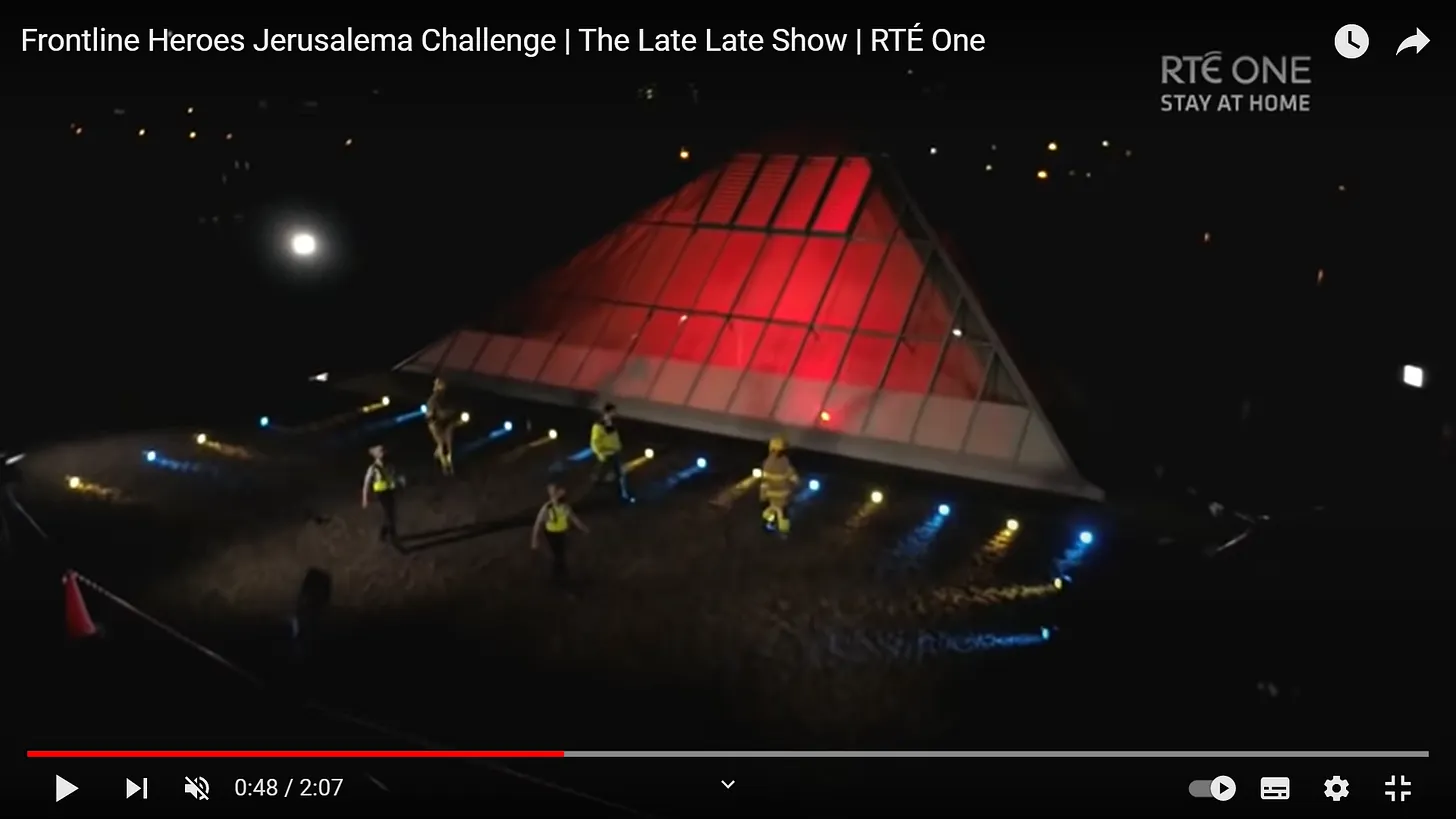
This is the roof of the Square Tallaght, with a pyramid lit up red?
Square and Compass symbol
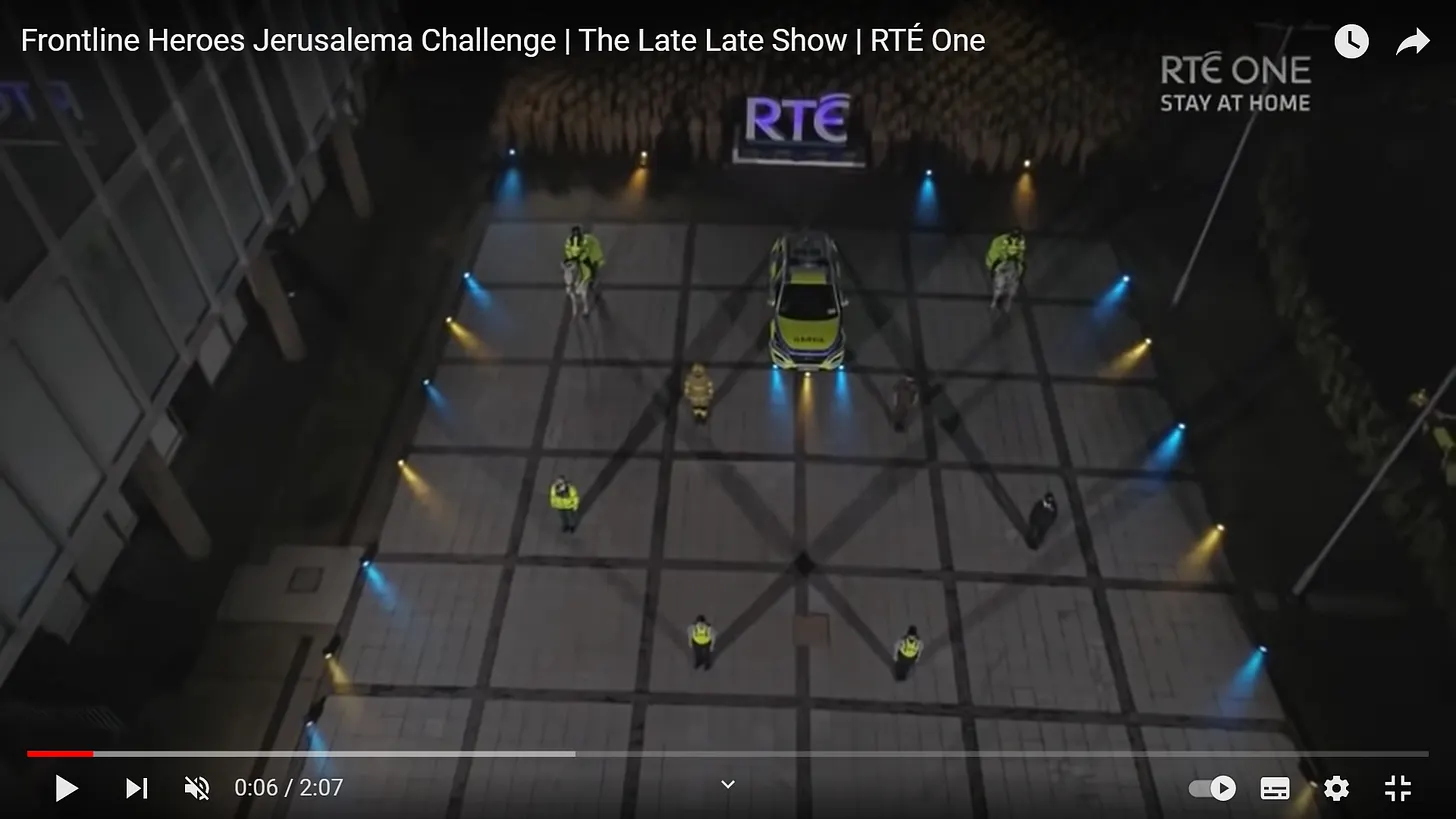
Some 300 years on from evicting the Irish from their homes, farms & lives, the Palatinite Rulers In Ireland are yet to update their tactics, but why would they. It works perfectly now on a global scale. And still we let them use our (Irish) good name, Art, Creativity, Poetry to coerce more unsuspecting victims, we must stop this basterdisation of what it is to be human.
What are your thoughts? Leave a comment below.


